
Altra Lone Peak 9+ Review
The Altra Lone Peak 9+ is a zero-drop trail running shoe designed to allow the runner’s feet to function naturally, promoting good biomechanics on a variety of trail conditions. The Lone Peak, Altra’s original shoe, has become an icon, helping many runners and walkers address biomechanical issues that previously prevented them from running or walking, simply by allowing the feet to function properly within the shoes.
 Like all of Altra’s original shoes, the Lone Peak 9+ is a zero-drop shoe. This means the height of the midsole is the same at both the heel and forefoot, essentially creating a flat base. Most shoes, including many running shoes, have a higher heel than forefoot, which encourages a heel strike. This stops the feet from properly absorbing shock, increasing the force that the body must absorb. A zero-drop shoe, however, promotes a more natural midfoot landing, with the foot touching the floor under the runner’s centre of gravity. This reduces the force on the body and allows the foot to spread on impact, absorbing shock and stabilising the runner. The plantar fascia, which acts like an elastic band at the base of the foot, gets stretched on impact and recoils, helping propel the runner into the next stride.
The broad, rounded toe box that Altra shoes are known for gives the foot the space to spread on impact. If you’re not used to shoes with this type of toe box, they may feel roomy at first. However, once your feet adjust to spreading on impact, you’ll likely find that all your other shoes feel narrow and restrictive.
The heel cup lacks a plastic support, allowing it to mould to the shape of your feet when the shoes are laced up. This helps prevent heel slippage. The flexibility of the Lone Peak through the midfoot also contributes, as the shoes bend and flex with your foot, reducing tension on the heel. Previous versions, the Lone Peak 7 and 8, featured an external plastic support around the heel cup, providing some stability and stiffening the heel. This support has been removed in the Lone Peak 9+, returning to the original design, which allows the heel to move more naturally. When comparing the Lone Peak 8 to the Lone Peak 9, you can feel the difference, with the version 9 allowing more independent heel movement.
The padding inside the heel cup, around the cuff, and on the tongue strikes a nice balance between being overly padded and too minimal. This provides a comfortable feel essential for a trail running shoe used daily, while also reducing the amount of water the upper absorbs.
The tongue is gusseted to prevent debris from entering the shoe and features a tab for the laces to thread through, reducing movement during your run. There is also an extra lace hole that can be used to pull the heel in tighter or for butterfly lacing. When laced up, the upper pulls snugly around the heel and ankle. The fit is snug through the midfoot, but the forefoot is free, allowing the foot to spread and function inside the shoe.
The Lone Peak 9+ includes a Velcro gaiter attachment on the outside of the heel cup, along with a D-ring at the base of the laces to allow for gaiter attachment.
The Lone Peak 9+ is slightly heavier than the Lone Peak 8, primarily due to the more robust materials used in the upper. These materials are designed to be more abrasion-resistant. The rubber piece at the toe now curls up more, offering a bit more of a toe bumper compared to previous versions.
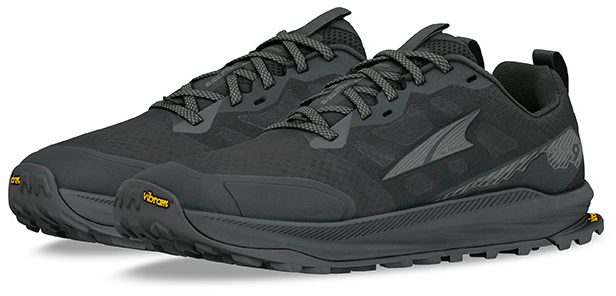 The Lone Peak 9+ is built on Altra’s original last, which is the broadest and has the most volume, providing ample room for the feet to spread and function properly. The Lone Peak 9+ has slightly less height in the toe box than the Lone Peak 8, making the upper feel less baggy. The width remains the same. For those with high-volume feet, a wide version of the Lone Peak 9+ is available, offering more volume in the upper to accommodate wider and/or higher-volume feet, allowing more room for foot function.
The stack height is 25mm, and the midsole is made of AltraEgo, providing a firm, responsive ride with some ground feel. They are cushioned enough for most runners to use for a mile of road running on the way to the trails, but may feel firm compared to road shoes with very soft midsoles. The lug depth is 3.5mm, versatile enough for hard-packed trails and some muddy single tracks. The more natural running style promoted by Altra shoes makes you nimble and light on your feet, allowing you to navigate muddy sections better than expected, despite the short lugs. However, if your runs often feature deep, sloppy mud, you may want to consider the Altra King MT, which has 6mm lugs and is better suited for softer ground (https://www.northernrunner.com/blog/altra-king-mt-2-review/).
Altra offers two versions of the Lone Peak 9: the standard Lone Peak 9 and the Lone Peak 9+. The difference lies in the outsole rubber. The standard Lone Peak 9 uses Altra’s MaxTrac outsole, while the Lone Peak 9+ uses Vibram Megagrip. At Northern Runner, we sell the Lone Peak 9+ because the Vibram Megagrip offers superior traction on wet surfaces such as wet rock, roads, and wood. Vibram Megagrip is also durable enough for some road and hard-packed trail use, making the Lone Peak 9+ a better option for UK trail runners, where trails are often wet and slippery.
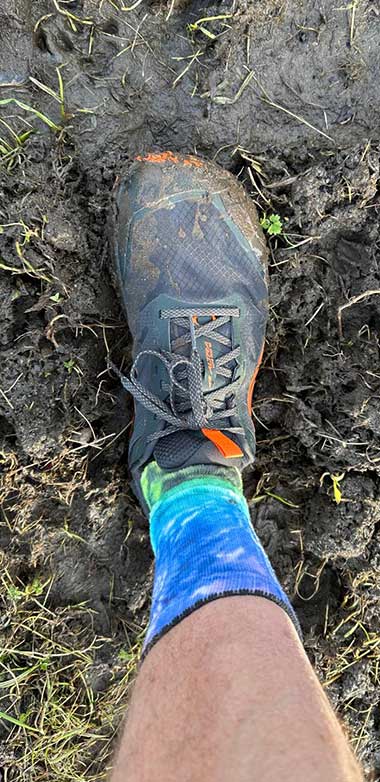
Many running brands share a similar concept, but Altra’s original shoes, like the Lone Peak, are quite different. You need to run in these shoes for them to work. There’s no rocker to propel you forward, nor a super-soft midsole to do the work for your feet. The Lone Peaks provide underfoot protection, traction, and space for your feet to function. If you’re not used to shoes like these, it’s a good idea to gradually increase your time in them, alternating with other running shoes to prevent overloading muscles that aren’t used to functioning like your feet and lower legs.
I run in a variety of shoes, but the one thing that never changes when I put on a pair of Lone Peaks is that immediate, slipper-like feel. Even worn-out pairs remain in my shoe cupboard because they’re so comfortable for casual wear. If you’ve been using shoes with stiffness in the midfoot, the Lone Peak may initially feel flat. However, after a few strides, I adjust my posture by holding my hips high rather than letting the shoe rock me forward. I start lifting my feet off the ground rather than letting the shoe do it for me, and after a mile or so, it feels like I’m gliding along.
If you’re not accustomed to this type of shoe, you may notice your calves and feet feeling worked. Many runners enjoy the experience so much that they wear the shoes the next day. However, it’s best to alternate with another shoe to allow your lower legs to recover. This way, your feet and lower legs will gradually strengthen over time without overloading them.
Lone Peaks have become popular with ultra trail runners and long-distance walkers and hikers. Not just because of the slipper-like feel, but also because your feet swell less when they function naturally, leading to less rubbing and fewer blisters during multi-day walks or ultra-running events.
Altra shoes are similar in length to Topo, Brooks, VJ, Saucony, or 361. If you typically wear Hoka, Inov-8, Karhu, La Sportiva, or New Balance, we recommend trying half a UK size smaller to get a similar fit (e.g., Altra UK 11 is similar to Hoka UK 11.5).
The Lone Peak 9 is available with both mesh and waterproof uppers, with the mesh version offered in regular and wide/high-volume fits.
In summary, the Altra Lone Peak 9+ is a versatile trail running and walking shoe, designed to allow your feet to function naturally within the shoes, helping reduce injury and improving fitness and strength with consistent use.
Other Considerations
Inov-8 Trail Talon: Inov-8’s new shoes all have a broad rounded toe box to allow for foot function the same as Altra shoes. The Trail Talon comes in two widths. The wide version has a similar width and volume to the Altra Lone Peak 9+. The 6mm heel to forefoot drop of the Trail Talon takes away from the natural ride not legging the foot function quite as freely as the Lone Peak’s zero drop. The Trail Talon’s 6mm long lugs offer better traction on soft ground yet still ride OK on firmer trails. https://www.northernrunner.com/blog/inov-8-trailtalon-review/
Hoka Speedgoat 6: A very different concept. Hoka shoes are designed as a piece of Athletic Equipment to in effect replace the runner’s feet. Where as Altra shoes are made to allow the runners feet to function. Available in two width Men’s and Women’s. Also available in a Gore-Tex version. https://www.northernrunner.com/blog/hoka-speedgoat-6-review/
Brooks Cascadia 18: Although the flexible forefoot allows for a midfoot strike the stiff heel is more suited to a heel striker. Available in two width Men’s and two width Women’s as well as a Gore-Tex version. https://www.northernrunner.com/blog/brooks-cascadia-18-review/
Topo Athletic Terraventure 4: Topo shoes have a broad rounded toe box like Altra and are designed to allow the runners feet to function inside the shoes. They differ from Altra in that they tend to have a snugger fit through the midfoot and a stiffer heel. This doesn’t allow the foot quite the same freedom to function as you get in the Altra Lone Peak. The Terraventure 4 has less stiffness through the midfoot than other Topo models and for this reason is the nearest shoe in Topo’s trail running range to the Lone Peak. The 5mm long lugs offer better traction on soft trails. The outsole is also made from Vibram Megagrip. There is a waterproof version of the Terraventure 4. https://www.northernrunner.com/blog/topo-athletic-terraventure-4-review/
La Sportiva Akasha II: A much narrower fitting shoe with versatile grip and cushion. https://www.northernrunner.com/blog/la-sportiva-akasha-ii-review/
Altra King MT 2: A zero drop shoe like the Lone Peak made with a narrower last if offers a snugger fit around the foot but, still have a rounded toe box to allow for foot function. The 6mm long lugs offer a good level of traction on soft trails. https://www.northernrunner.com/blog/altra-king-mt-2-review/
Comments are closed here.