
Hoka Speedgoat 6 Review
The Hoka Speedgoat started as a trail running shoe designed for racing 100-mile events. Since then, Hoka has expanded its lineup, introducing more trail running shoes. Arguably, the Hoka Tecton X 3 or perhaps the Mafate Speed 4 has taken over as Hoka’s 100-mile racing shoe. Regardless, the role of the Speedgoat in Hoka’s trail running range has evolved, and the updates in the Hoka Speedgoat 6 reflect these changes.
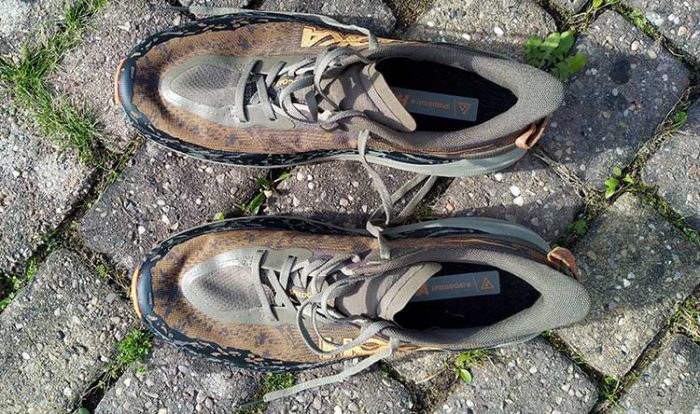 The Hoka Speedgoat 6 is now a versatile trail running shoe, designed for long distances on trails while also allowing you to pick up the pace. The heel-to-forefoot drop has increased from 4mm to 5mm, enhancing the effectiveness of the rocker, enabling quicker runs. The midsole remains made from EVA foam, but the foam is now denser, providing more energy return and allowing for quicker leg turnover. Previous Speedgoat models could be described as long-distance cruisers, as their soft cushioning invited your feet to enjoy a pillowy feel. In contrast, the Speedgoat 6’s midsole encourages you to lift your feet. Additionally, the midsole is stiffer, guiding you through an efficient gait cycle for maximum push-off.
The upper has also changed. The new woven mesh feels firmer and is designed to be more durable with less stretch, keeping your foot firmly secured to the midsole. An internal cage in the upper helps pull the material around the foot when the laces are tightened. The ankle collar and heel are well-padded, and the heel is flared to move it away from the Achilles, reducing the chance of rubbing. The top section of the tongue is lightly padded to cushion your feet from the laces where they are tied. The tongue is gusseted to minimize debris entering the shoes, and a lace loop helps keep it in place while running.
The heel fit is snug, but if you need a tighter fit, there is an extra lace hole, which you can also use to butterfly the laces. The toe box still features a vamp, a stretchy section in the center designed to provide more room if your feet expand during runs. This allows the toe box to be snug without becoming too tight after hours of running.
The Speedgoat 6 is lighter than previous models, mainly due to a new EVA foam midsole. The women’s model weighs 232 grams in a UK 5, while the men’s model weighs 278 grams in a UK 8. We found the toe box offers a slightly straighter big toe line and slightly more width than the previous version. Wide widths for both men’s and women’s models are available, ensuring a perfect fit. In terms of size, Hoka is comparable in length to New Balance, Inov-8, La Sportiva, and Karhu. If you typically wear Brooks, Saucony, Topo, or Altra, we recommend trying half a UK size larger for a similar length.
The midsole retains the characteristics common to all Hoka running shoes. Your foot sits inside the midsole, providing a very stable feel. The midsole’s curved design creates a rocker shape, which means that when your foot touches the ground, the shoe rolls your foot backward, promoting a more upright running posture and helping to engage your hamstrings and glutes. This reduces braking force and supports quick turnover.
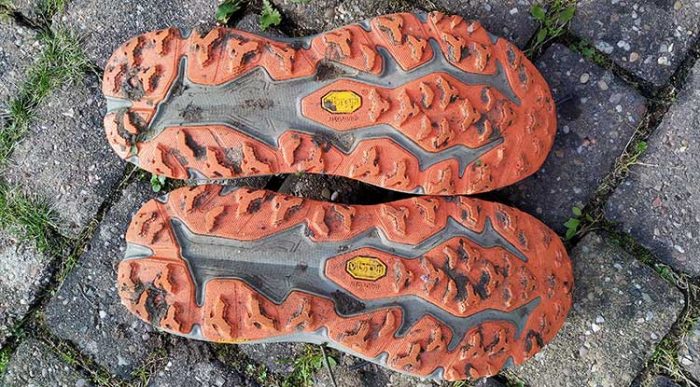 The low heel-to-forefoot drop facilitates initial contact with the ground more inline with the runner’s center of gravity, reducing heel striking. This further decreases braking forces and helps keep the runner moving forward. The stack height is 38mm in the heel and 33mm in the forefoot of the women’s model, and 40mm in the heel and 35mm in the forefoot of the men’s. This design provides a good level of cushioning and underfoot protection. However, it does reduce your feel for the ground, making the shoes feel less nimble. You must trust that the outsole will grip the ground, as you can’t feel it doing so. This isn’t usually an issue; the Speedgoat 6 features a Vibram Mega Grip outsole with 5mm lugs. These provide good grip on various soft and hard surfaces while still feeling smooth enough for cruising on hard-packed trails or tarmac.
While the 5mm lugs offer traction in soft mud, they tend to clog easily in sticky conditions. This occurs because the stiff, rocker-shaped midsole doesn’t flex as much as other trail shoes, preventing the mud from being worked out of the lugs effectively. Whether this is a problem depends on the terrain you run on. If you frequently run around the edges of farmer’s fields with clay-rich soil, the shoes will pick up mud. However, if you run on single tracks with only a few sticky patches, the Speedgoat’s grip is likely adequate.
The new firmer EVA midsole offers less dampening than the very soft midsoles used in earlier Speedgoat versions. However, it provides noticeably more energy return, propelling you along faster. Trail shoes with thick midsoles are designed to absorb some of the lumps and bumps in the trail, allowing you to maintain forward progress without altering your stride too much. The new firm midsole in the Speedgoat 6 is less effective in this regard, making you feel a bit more unstable on rough terrain. The advantage is that when you hit smoother ground, you can push on more effectively than in previous versions, which often felt overly soft. Whether this is an issue will depend on your trail conditions. If you navigate single tracks through woods with many tree roots, the Speedgoat 6 might not be the best choice. However, if your trails are clear of obstacles like tree roots or boulders, the Speedgoat 6 may well suit your needs.
In summary, the Hoka Speedgoat 6 is a versatile trail running shoe designed for a mixture of different trails, including sections of tarmac. The firmer midsole has made version 6 feel faster, moving away from the long-distance plodding characteristic of previous iterations. If you prefer the long-distance comfort of previous Hoka Speedgoat models, consider looking at the Hoka Mafate Speed 4.
Other Considerations
Inov-8 TrailFly: A broad rounded toe box gives your feet more room to function. The shoe is also more flexible and doesn’t have a rocker which supplies a more natural ride. You are running in the shoes rather than rely on the curve of the midsole to roll you a long (which can be good thing when your legs are tied at the end of a long run). The midsole is more flexible which allows it to bend to the terrain which gives a smoother ride on rough ground. More feel for the ground makes you nimbler but, there is less cushioning. https://www.northernrunner.com/blog/inov-8-trailfly-review/
NNormal Tomir 2: The toe box is narrower and more pointed. Similar to the original Speedgoat. The midsole is bouncier and softer. To me this felt less smooth than the firmer Speedgoat 6. https://www.northernrunner.com/blog/nnormal-tomir-2-review/
VJ Sport MaXX 2: A much nimbler feeling shoe that still has a good level of cushioning. More feel for the ground which means less underfoot protection but, you are able to be more nimble in the shoes and your feet function more. https://www.northernrunner.com/blog/vj-sport-maxx2-review/
Topo Athletic MTN Racer 3: A broad rounded toe box gives the MTN Racer more room for your feet to function inside the shoes. The lugs are also 5mm in length but in our experience shed the mud slightly better. https://www.northernrunner.com/blog/topo-athletic-mtn-racer-3-review/
Altra Timp 5: A broad rounded toe box and zero drop allows a more natural gait. The traction isn’t as good as the lugs are a lot smaller and not as long or aggressive. The cushioning is softer. https://www.northernrunner.com/blog/altra-timp-5-review/
Scarpa Ribelle Run Kalibra ST: A similar firm ride with a curved midsole/rocker. The lugs are 6mm long and a bit more aggressive biting into soft ground more effectively than the Speedgoat lug and shedding the mud better. The flip side is that they don’t ride as smoothly on firmer tracks and trails. The BOA fastening is nice. Particularly in winter when laces get wet and muddy. https://www.northernrunner.com/blog/scarpa-ribelle-run-kalibra-st-review/
La Sportiva Jackal II BOA: A similar level of grip but, a thinner more flexible midsole allows the lugs to shed the mud slightly better. There is more feel for the ground and the midsole take the curvature of the terrain better which gives a smoother ride on more broken ground. The built in gaiter stops debri getting into the shoes quite effectively and bridges the gap between your running legs and the shoes which keeps your feet warmer in winter. A BOA fastening means you don’t have to worry about your laces coming undone or getting wet and muddy. https://www.northernrunner.com/blog/la-sportiva-jackal-ii-boa-review/
Brooks Cascadia 18: A softer heel with a firm forefoot. More flexible which helps cope with more broken ground better. No rocker so they won’t feel as smooth on hard packed trails to some runners but, if you used to Brooks shoes with a high heel to forefoot drop then these will feel and ride very similarly. Traction is equally good. https://www.northernrunner.com/blog/brooks-cascadia-18-review/
Comments are closed here.