
Topo Ultrafly 6 Review
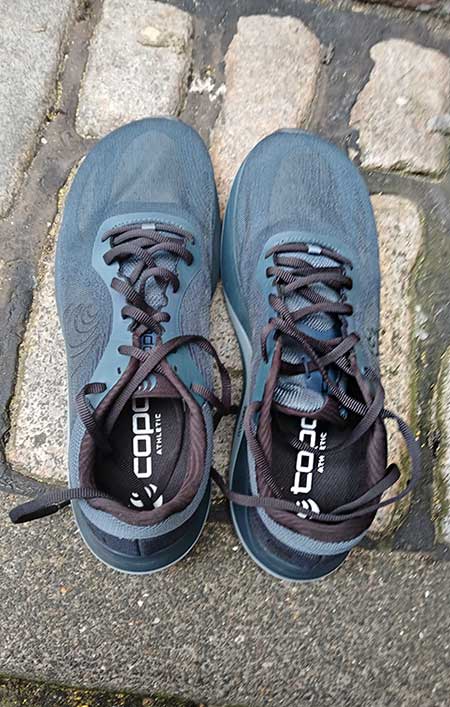 The Topo Ultrafly 6 is an everyday road running shoe that offers a mild level of support for runners who overpronate. This sixth version of the popular model includes some significant updates but, like all Topo shoes, retains a broad, rounded toe box to allow the feet to spread and function naturally inside the shoe.
When the foot hits the ground while running, the arch compresses to absorb shock. It should then quickly reshape, allowing the runner to push off from the big toe. If the arch does not recover quickly enough, the foot collapses inward, causing the runner to push off from the inside of the foot. This inward movement can affect alignment through the ankle, knee, and hip. Because running on hard, flat surfaces is highly repetitive, this action is repeated thousands of times per run. Common issues include blisters on the inside of the foot, shin pain, discomfort below the kneecap, or pain along the outside of the thigh.
To address this, many running shoe brands design models that guide the foot from landing to toe-off, resisting inward rotation and encouraging a more efficient push-off. Brands use different approaches: some aim to control the gait cycle more directly, while others focus on promoting natural foot function so the foot becomes stronger over time. Topo falls into the latter category, encouraging a more natural running style that allows the body to function as intended.
At Northern Runner, we stock a wide range of shoes with broad, rounded toe boxes because allowing the toes to spread can help resolve many common running issues. If you are used to restrictive footwear, your feet may have lost some of their natural function. Giving them space can help restore this over time. Bunions, for example, are often caused by narrow, pointed shoes that push the big toe inward, placing stress on the joint. Allowing the toes to spread can help reduce discomfort and improve function. Similarly, black toenails are usually caused by a lack of space in the toe box rather than being a badge of effort. Shoes with a rounded toe box are particularly popular among ultra runners, as allowing the foot to function more naturally can help manage swelling and reduce friction over long distances.
The key update from the Ultrafly 5 to the Ultrafly 6 is the midsole foam. For the foot to function effectively, it needs feedback from the ground, which is typically better achieved with a firmer midsole. The Ultrafly 5 offered a firm and responsive ride. However, with the current trend towards softer, more cushioned shoes, the Ultrafly 6 introduces a slightly softer and more responsive feel.
Topo has aimed to strike a balance between cushioning and natural function. The new ZipFoam is lighter, softer, and more energetic, but still provides enough ground feel to ensure the foot remains active rather than passive. The stack height has increased by 2 mm to 32 mm in the heel and 27 mm in the forefoot, while the 5 mm drop remains unchanged. Although there is sufficient cushioning for a comfortable heel strike, the design still encourages a more midfoot landing, allowing the foot to spread naturally on impact. This stretches the plantar fascia, which acts like an elastic band, absorbing impact and recoiling to assist the next stride.
 Many brands offering a wide toe box also provide a looser fit through the midfoot to allow the arch to move freely. Topo takes a slightly different approach, offering a snug fit through the midfoot while maintaining a wider forefoot. This creates a more familiar feel for runners used to traditional shoes, while still delivering the benefits of a natural toe splay.
As expected from a daily training shoe, the heel collar, tongue, and upper are well cushioned for comfort. The heel cup no longer uses a rigid plastic counter but still holds its shape while remaining flexible enough to adapt to the heel, creating a more personalised fit. When laced, the upper wraps securely around the foot.
The laces pass through two tongue loops to prevent the tongue from shifting during runs, and an additional lace eyelet allows for a more secure fit if needed. The upper itself has a dual-knit construction, with a tightly woven outer layer and a softer inner layer. This reduces stretch and improves lockdown compared to previous versions.
Support has been increased by enhancing the medial post, which uses a firmer foam wrapped around the heel. Positioned beneath the softer cushioning, it provides subtle resistance to inward movement without feeling intrusive. This level of support is typically sufficient for mild overpronators and works alongside the wide toe box to reduce excessive inward roll.
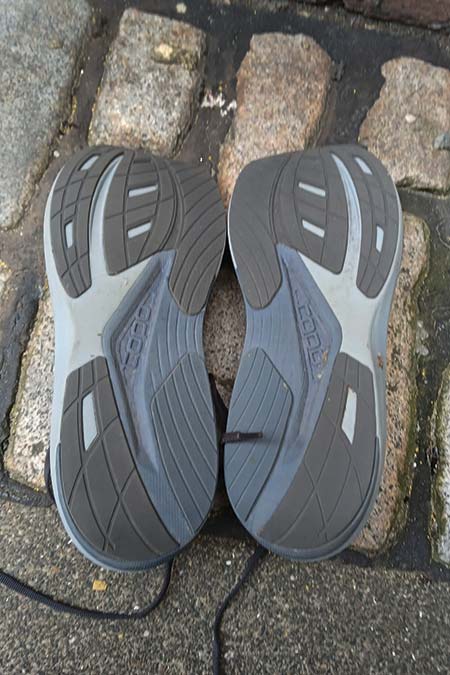
Durability and traction have also been improved, with increased rubber coverage on the outsole. The Ultrafly 6 remains relatively lightweight at approximately 212 g for a women’s UK 5 and 272 g for a men’s UK 8.
There is no rocker geometry in the midsole, allowing for a more natural gait and greater muscle engagement compared to shoes that rely on a rocker to guide the foot through the stride.
In terms of sizing, Topo shoes are similar in length to Altra, Brooks, Saucony, and 361. If you typically wear Hoka, New Balance, Karhu, Inov-8, or La Sportiva, it is worth trying half a UK size smaller for a comparable fit. For example, a UK 11 in Topo is similar in length to a UK 11.5 in New Balance. If you are used to narrower, more pointed shoes, Topo will feel roomier. It is not advisable to size down to compensate, as the spacious toe box is a key benefit. The Ultrafly 6 is also available in a wide fit, which should suit runners who typically wear a 2E width.
Despite the slightly softer midsole compared to the previous version, I found the Ultrafly 6 to be more versatile than just an easy-day shoe. It feels comfortable at slower paces but also responds well during steadier efforts, making it suitable for a range of sessions, including easy runs, tempo runs, and fartlek workouts. After around 100 miles of use, the cushioning has softened slightly but retained its responsiveness. This change is more noticeable when walking than when running, where the shoe continues to feel consistent.
The pronation support is subtle and unobtrusive, and the shoe does not feel overly controlling. It allows for a natural running experience where you can largely forget about the shoe and focus on the run. My only drawback is that the outsole can feel slightly slippery on wet, uneven surfaces such as disused railway paths, where some other road shoes perform better.
In summary, the Topo Ultrafly 6 offers a more energetic ride than its predecessor while maintaining the core fit and philosophy of the brand. It is a versatile option suitable for easy miles, longer runs, and moderate-paced efforts, with enough support for mild overpronation without compromising natural foot function.
Alternatives to Topo Ultrafly 6
Brooks Glycerin GTS 23: Brooks running shoes a split into shoes that do a log of the work for you and shoes that allow the body to function more. The Glycerin GTS 23 is flexible through the midfoot and doesn’t have a curve or rocker shaped midsole which allows the body to do more of the work of running. The toe box is narrow and pointed which discourages foot function, so they don’t promote as much natural foot function as the Topo Ultrafly 6 but, more than a stiff running shoe with a rocker. Available in two widths men’s and women’s. https://www.northernrunner.com/blog/brooks-glycerin-gts-23-review/
Brooks Adrenaline GTS 25: A similar Nitrogen infused midsole but, with a touch more bounce and a bit less feel. A narrower toe box. Available in three width men’s and two width women’s. https://www.northernrunner.com/blog/brooks-adrenaline-gts-25-review/
361 Kairos 3: The Kairos 3 has quite a noticeable rocker designed to keep the foot moving when it touches the floor and get to toe off quickly. This reduces the time the foot has to roll inwards and also helps the runner maintain a more upright posture making them lighter on their feet. These are a very popular selling in Northern Runner’s Newcastle-upon-Tyne shop. https://www.northernrunner.com/blog/361-degrees-kairos-3-review/
Hoka Arahi 8: A firmer piece of foam in the midsole helps to reduce how much the foot rolls inwards while the rocker shaped midsole guides the foot from impact to toe off. The feel of the cushioning is softer and there is less feel for the ground than with the Ultrafly 6. Available in two width men’s and women’s. https://www.northernrunner.com/blog/hoka-arahi-8-review/
Saucony Guide 18: Like the Kairos 3 there isn’t really a lot of inward rotation resistance. The shoes is designed to guide the foot from impact to toe off quickly. Like the 361 Kairos 3 these have a very smooth feeling to the ride. https://www.northernrunner.com/blog/saucony-guide-18-review/
Karhu Ikoni 3.0: The Karhu Fulcrum is designed to reduce how much the runner is propelled upwards by the cushioning in the shoes and translate this to forward propulsion. There is an inbuilt level of anti-pronation support within the shoes. The big toe line is straight, and this promotes a positive push off. The ride is firm and responsive less bounce than the Ultrafly 6 more inline with the Ultrafly 5. https://www.northernrunner.com/blog/karhu-ikoni-3-review/
New Balance 860v15 It provides effective support for mild overpronation, but now delivers it in a softer, more cushioned package with a more noticeable level of guidance. https://www.northernrunner.com/blog/new-balance-860v15-review/
Comments are closed here.