
Karhu Ikoni 3 Review
The Karhu Ikoni 3 is an everyday road running shoe suitable for both neutral runners and those needing some pronation support. Karhu has been making running shoes for over 100 years, and the Ikoni has been part of their lineup for six years. This shoe is part of a new range of running footwear that uses data from runners’ feet, collected by scanning them during a shoe fitting, to create the best possible fit.
 The Ikoni 3 has several significant updates compared to the Ikoni 2.5, but it still offers the same comfortable fit and cushioned ride. The Karhu Fulcrum, a key feature in the midsole, remains, providing both stability and propulsion. The overall shape of the shoe has not changed, ensuring a consistent feel for those familiar with previous models.
One of the most notable changes is the increased stack height. The heel now measures 30mm, while the forefoot sits at 22mm, resulting in an 8mm drop from heel to forefoot. This, combined with the curvature of the midsole, makes the Ikoni 3 suitable for both heel strikers and midfoot strikers. The foam used in this version is denser, yet it has a higher level of rebound, making it feel softer and more responsive compared to the foam in the Ikoni 2.5. This update improves the durability of the midsole and contributes to a smoother ride.
In the Ikoni 2.5, there was a noticeable difference between the firmer heel section and the softer forefoot section of the midsole. In contrast, the Ikoni 3 delivers a more uniform feel throughout, providing a smoother transition from landing to toe-off.
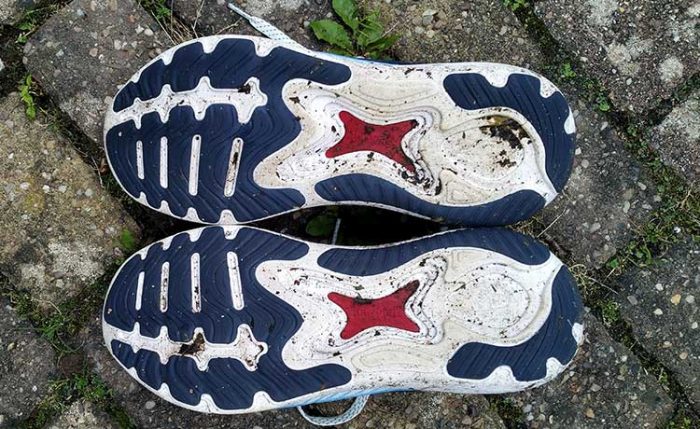
All Karhu running shoes feature the Karhu Fulcrum, a firm triangular piece embedded in the midsole. As the foot rolls over the Fulcrum, it creates a seesaw effect, pushing the runner forward. This converts the upward bounce typical of a midsole into forward propulsion. Other running shoe brands achieve a similar effect by curving the base of the midsole to create a rocker. However, shoes with a rocker can feel less stable when standing and often pull the leg back when the foot hits the ground. The Fulcrum, on the other hand, encourages the runner to lift their heels, promoting an upright posture and a lighter, more efficient stride. This helps reduce wear and tear on the body while running.
The updates to the Ikoni 3’s midsole provide a smoother ride with a bit more bounce. Despite the shoe’s broad base and stable feel, it allows for nimble movement, making it possible to pick up the pace without feeling weighed down. Many everyday road running shoes feature very soft, unresponsive midsoles that are comfortable for slow, easy runs but don’t perform as well when attempting faster paces. The Karhu Ikoni 3 strikes a balance by remaining versatile—it’s a daily running shoe suitable for a variety of activities, whether it’s a steady run, fartlek, long run, or easy recovery session.
The women’s Karhu Ikoni 3 weighs 257 grams in a UK size 5, while the men’s version weighs 301 grams in a UK size 8. There are lighter everyday running shoes on the market, but it’s important to note that the weight of a shoe doesn’t always determine how heavy it feels on your feet during a run. The Fulcrum technology in Karhu shoes makes them feel lighter than their actual weight would suggest, enhancing the running experience.
 The engineered mesh upper in the Ikoni 3 is more breathable than previous versions, yet it retains the same comfortable, soft feel. The heel tab is nicely padded and slopes slightly away from the Achilles to reduce pressure. The heel cup is made of plastic, helping to hold the heel securely and provide stability for those who pronate. Both the cuff and tongue are well-padded, adding to the shoe’s overall comfort and providing a nice step-in feel.
The lace holes don’t extend as far forward into the toe box as they do in many other running shoes, leaving room for your toes to spread naturally. The gusseted tongue reduces the chance of it shifting while running. There’s also an extra lace hole for those who prefer a snugger fit at the heel or for runners who like to use butterfly lacing techniques.
The straight big toe line allows for a more effective push-off. Additionally, because the big toe joint isn’t under tension (as it might be in a more pointed toe box), the other toes are free to function properly, contributing to cushioning, stability, and propulsion.
The Karhu Ikoni 3 fits similarly to the previous model. Based on our experience, Karhu shoes are comparable in length to Hoka and New Balance. However, if you typically wear Brooks, Saucony, Topo, or Altra, you may want to try half a UK size smaller for a more comparable fit.
In summary, the Karhu Ikoni 3 is a stable road running shoe designed for everyday training. It’s versatile enough for a variety of runs, including faster-paced efforts, making it a solid choice for runners seeking comfort, durability, and performance in one package.
Other Considerations
361 Kairos: The Kairos is the big rival to the Karhu Ikoni 3 when customers are buying in store. The Ikoni 3 has a softer and more stable ride compared with the slightly more pronounced rocker of the 361 Kairos. The Kairos is available in two width men’s and two width women’s. https://www.northernrunner.com/blog/361-degrees-kairos-2-review/
Hoka Arahi 7: The Hoka Arahi 7 offers a softer feel to cushioning and a much narrower fitting with a more pointed toe box. The rocker or curve to the midsole gives the Arahi a less stable feel than the Ikoni 3 when standing in the shoes. https://www.northernrunner.com/blog/hoka-arahi-7-review/
Topo Ultrafly 5: The Ultrafly 5 has also increased it’s stack height and the midsole has been made softer in comparison to the Ultrafly 4. The cushioning has a similar feel to the Ikoni 3. Both shoes have a straight big toe line however, the toe box of the Ultrafly 5, like all Topo shoes is broad and rounded giving the feet more room to function. https://www.northernrunner.com/blog/topo-athletic-ultrafly-5-review/
Altra Paradigm 7: Altra like Topo have a broad rounded toe box. So, like the Ultrafly 5 the Paradigm 7 has a straight big toe line which is similar to the Karhu Ikoni 3 but, has a much broader, more rounded toe box to give the feet more room to spread on impact. The feel to the cushioning is similar. https://www.northernrunner.com/blog/altra-paradigm-7-review/
Brooks Glycerin GTS 21: A higher heel to forefoot drop makes the Brooks Glycerin GTS 21 a shoe designed for the heel striker. The midsole is softer and a lot bouncier. This makes them feel more cushioned but, the ride isn’t as smooth as the ride of the Karhu Ikoni 3. https://www.northernrunner.com/blog/brooks-glycerin-21-review/
New Balance Fresh Foam X 860v14: The cushioning is softer than the Karhu Ikoni 3 and not quite as responsive. Which makes the New Balance 860 v14 a less versatile shoe as it isn’t as nice to use at steadier paces. Although it is very comfortable and cushioned for easy runs. Available in three width men’s and two width women’s. https://www.northernrunner.com/blog/new-balance-860v14-review/
Comments are closed here.