
Brooks Ghost Trail Review
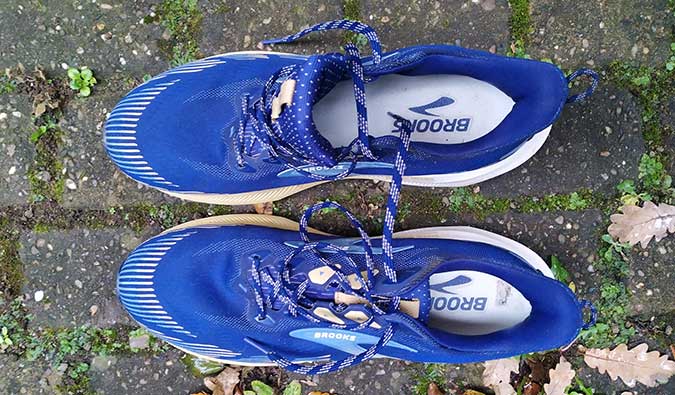 Brooks have taken the fit and comfort from their popular road running shoe, the Brooks Ghost—now in its 17th iteration—added a few lugs to the outsole, and tweaked the ride slightly to produce a road-to-trail running shoe. It’s ideal for runners who like to mix road and trail sections during their runs.
It’s always a challenge to make a shoe that feels smooth on tarmac but still provides the traction and flexibility needed for uneven terrain. The Brooks Ghost Trail uses the same last as the Ghost 17, offering the same secure and comfortable fit. Brooks have long excelled at step-in comfort, and this model continues that trend. The heel cup and collar are well padded with a soft, velvety feel, and the heel tab curves away from the Achilles to minimise irritation. The heel counter itself is firm, keeping the foot secure and stable. With an 8mm heel-to-forefoot drop, the Ghost Trail supports a smooth heel-to-toe transition, while still allowing enough flexibility through the midfoot for a midfoot strike.
The tongue is well padded, though not gusseted. Because the Ghost Trail is designed for less rugged terrain—think disused railway lines rather than muddy fields—a gusseted tongue isn’t necessary. The laces thread through a small loop on the tongue to help prevent it from sliding sideways, and there’s an extra lace hole for those who prefer a snugger heel fit or butterfly lacing.
The double jacquard air mesh upper is less open than that of the Ghost 17 to help keep debris out and improve durability. However, it still feels light, soft, and breathable—more like a road shoe than a rugged trail model. A 3D print wraps around the upper and over the toes to form a protective toe guard.
The midsole is made from DNA Loft v3, a soft, responsive, nitrogen-infused foam. Nitrogen-infused midsoles are sealed, preventing water and dirt from entering and helping them maintain their bounce and durability over time. They don’t soften or lose energy return like traditional EVA foams. Because the air is also sealed in, they deliver a springier ride. The Ghost Trail, however, finds a balanced feel—it’s not overly bouncy, so ground connection remains good, and it’s not so soft that it feels unstable or compresses excessively on impact.
Stack height is 36.5mm in the heel and 28.5mm in the forefoot—2mm more foam at the front compared to the Ghost 17. In use, though, it feels more flexible through the forefoot, thanks to flex grooves in the midsole that help the shoe adapt to varied terrain. The straight toe line promotes an efficient toe-off, which is especially noticeable when running uphill. The shoe flexes naturally, helping maintain an upright posture.
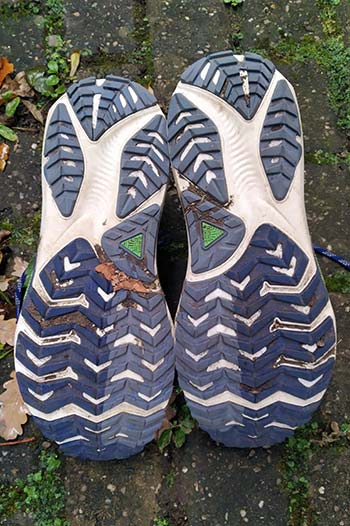 The outsole features 3mm lugs with a broad surface area, designed to grip on hard-packed ground rather than dig into soft mud. This allows the Ghost Trail to feel smooth and comfortable on both tarmac and firmer trails. The outsole rubber—Brooks Trailtack Green—offers reliable traction on wet surfaces while maintaining durability for road miles. It’s not as sticky as the rubber used on specialist trail shoes, but that’s by design: the Ghost Trail is meant to bridge the gap between a comfortable road shoe and a light trail model for smooth surfaces.
After more than 100 miles on mixed terrain, I’ve found the Ghost Trail to be a comfortable, versatile shoe. On the road, it feels very similar to a standard Ghost—perhaps even better. The more flexible feel and slightly lower drop make it easier to run in, for me. On trails, traction exceeded expectations. Although I haven’t yet tested them in wet, muddy conditions, they performed well on dry singletrack and over tree roots, offering enough flexibility to stay stable without feeling clunky.
The ride is responsive, with cushioning that feels soft but doesn’t compress excessively. This makes it easy to change direction or increase pace, making the Ghost Trail suitable for fartleks, long runs with pickups, or mixed terrain training routes that combine road and trail.
My only complaint—shared with the Brooks Cascadia—is drying time. The plush heel, collar, and tongue absorb a lot of water, whether from rain or dew-covered grass. Once wet, they take days to dry. More rugged trail shoes often have less padding; they may not feel as plush initially, but they don’t hold water and dry much faster.
In terms of sizing, Brooks shoes are similar in length to Saucony, Topo, Altra, and 361°. If you normally wear Hoka, New Balance, Karhu, Inov-8, or La Sportiva, consider going down half a UK size (e.g. a UK 11 in Brooks is comparable in length to a UK 11.5 in Hoka).
In Summary
The Brooks Ghost Trail is a versatile daily trainer for runners who mix road and trail. It handles everything from short, easy runs to longer efforts with pickups, offering a smooth ride on tarmac and enough grip for light trail adventures. While not designed for technical terrain, it strikes an excellent balance between comfort, cushioning, and adaptability.
Alternatives to Brooks Ghost Trail
Altra Experience Wild: Altra shoes have a broader more rounded toe box to promote foot function. With a 4mm heel to forefoot drop the Experience Wild promotes more of a midfoot landing allowing a more natural running action. This makes the shoes feel lighter and nimbler but, not as stable or cushioned in ride as the Brooks Ghost Trail. https://www.northernrunner.com/blog/altra-experience-wild-2-review/
Inov-8 TrailFly Max: A broad rounded toe box allows for more foot function. The lugs offer a bit more traction on soft ground and are also a bit stickier on wet surfaces. The midsole isn’t as soft and springy as the Ghost Trail. The 6mm heel to forefoot drop reduces the heel strike and encourages a more natural midfoot landing. Available in two width Women’s and two width Men’s. https://www.northernrunner.com/blog/inov-8-trailfly-max-review/
Hoka Challenger 8: The Hoka Challenger is the trail version of the popular road running shoe the Hoka Clifton. The traction really is just for hard packed trails and so isn’t as versatile as the Ghost Trail outsole. The soft cushioning and rocker shaped midsole has a very different feel to the ride as it guides the runner through the gait cycle. https://www.northernrunner.com/blog/hoka-challenger-8-review/
Topo Ultraventure 4: A much more cushioned shoe than the previous options with a broad rounded toe box to allow for foot function. Although billed as a long distance shoe the rounded lugs don’t offer a lot of traction on soft ground but, do ride well on harder packed surfaces including tarmac. This makes them a good option as a road to trail shoe. https://www.northernrunner.com/blog/topo-athletic-ultraventure-4-review/
Comments are closed here.