
Women’s Altra Escalante 5 Review (Female Reviewer)
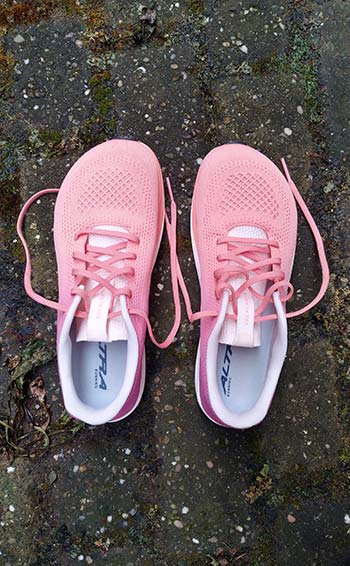 The Escalante 5 from Altra is the next generation of one of Altra’s original, minimal running shoes, the Escalante 4. If you’re new to the Altra brand, in a nutshell, they embrace the simplicity of Mother Nature’s mechanics, creating running shoes that not only allow, but encourage the feet to work naturally. The main features of Altra shoes, therefore, are the wide, roomy, anatomically shaped toe box that gives your forefoot space to sit straight within the shoe, which in turn allows your foot to function as you land and toe off, and the zero drop, which gives a grounded, stable feel rather than your foot sitting at an angle, putting unnecessary pressure on your toes.
The Escalante series is the classic running shoe, great for everyday use and more specifically tempo and quick-paced running. It’s versatile, nimble and brings a whole new feel to your running. As brilliant as the Escalante 5 is, if you haven’t run in zero-drop shoes before, then you will need to proceed with caution, possibly looking at the Altra Experience Flow 3 as a halfway house, with only a 4mm drop and a little more cushioning, before moving to zero drop. Zero-drop shoes can feel harsh on the calves if you’re used to a raised heel on your shoe, so it’s better to ease yourself into the Escalante 5 rather than cause any irritation. But once you’ve made the jump, I think you’ll be impressed!
Is There an Advantage to Running in Zero-Drop Shoes?
Having run in the Escalante since it first appeared, I love this shoe and how it feels. Compared to high-stack, max-cushioned shoes that propel you along, the Escalante 5 is a 24mm stack shoe from heel to toe, and I immediately feel grounded and balanced. The cushioning is classed as low, however, this doesn’t mean there is none. Altra use the Altra EGO midsole, which offers a balance between cushioning and responsiveness.
When running in the Escalante 5, I feel incredibly light on my feet. Because my feet respond to the ground, I find they retract quickly and nimbly, creating a choppy, speedy feel to my run. Being more grounded means I’m much more aware of my landing and can react instantly. I feel myself picking my feet up more quickly and my hamstrings engaging. The result is amazing: bouncy, light, floating. The lower stack height also seems to encourage me to land more towards my midfoot, rather than striking heavily with my heel, so I don’t get that slapping or pounding sensation against the ground. The experience is completely different.
In an age where shoe developments seem to focus on maximising cushioning, it would be easy to think that anything less isn’t conducive to good running. But having witnessed Zola Budd run barefoot over the track and cross-country in the 1980s, with effortless style and speed, I think there’s a lot to be said for having a better connection to the ground. There is also a growing trend in barefoot daywear shoes, with increasing interest in the effects of squashing your feet into pointy toe boxes, excessively high heels and rigid midsoles.
So how does the Escalante 5 compare to its predecessors? Personally, I found the Escalante 5 to be only slightly different, the main difference being the upper. Earlier editions used a softer material, which led to a feeling that my foot would slide off the midsole when running at speed. However, the Escalante 5 upper is a knit rather than a mesh, which feels much more substantial. My foot now feels completely secure, and that feeling of slippage has been eliminated.
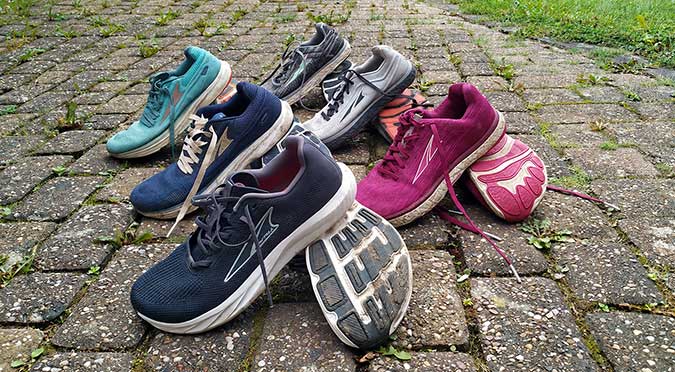
The tongue has a velvety touch and feels soft against the foot. Aesthetically, the upper also looks more like a sneaker in shape and style, giving it a classic look. There is more volume in the toe box, and the laces start higher up the foot. This could have caused a restricted feel if the volume of the upper hadn’t been increased, but it isn’t an issue, and I do have incredibly wide feet, so I was initially a bit unsure!
Having had children, my feet have changed over the years. They’re wider than they used to be, my arches have dropped a little and even my shoe size has changed. Finding a shoe with enough room for my feet, without feeling loose or insecure when I’m running quickly, is therefore really important to me. The Escalante 5 manages this particularly well. As you tie the laces, the collar is drawn in to sit snugly against the ankle, making your foot feel secure while still allowing plenty of room for your toes to spread.
The colours are also great, from a pinky Desert Flower/Coconut Cream combination to Black/Pink Glow/Orange Pop.
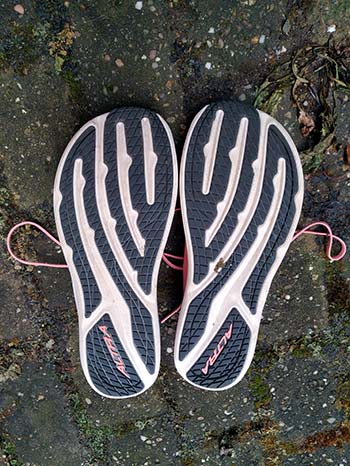
The InnerFlex midsole feels as comfortable as previous versions, but with a little more flexibility at the forefoot. The grooves on the bottom are different in shape to previous versions and offer a different function, allowing the foot to flex more, which you can really feel as you toe off. To complement this, the Vibram rubber on the outsole supports this groove structure, offering better grip and durability where needed. As it’s a shoe designed for speed as well, the tiny grooves within the outsole definitely make it grippier as you corner on faster-paced runs.
Should My Feet or the Shoes Be Doing All the Work?
The stack height looks bigger than 24mm, whereas previous versions showed more clearly where the upper and midsole joined. The way the upper and midsole come together means my foot sits more snugly and firmly in the shoe, and any tendency to slip has been eradicated.
 The shoe does hark back to the days when less was more, and racing shoes were minimal and incredibly lightweight. The Escalante 5 is too, at just 221g. You really do feel featherlight when running, but the midsole still gives me enough support and cushioning to run quickly.
What I found when I first started running in shoes like these was that my feet got a workout too! They could feel tired and warmer than usual after a run, and for me, this was because they were working as much as my other muscles, rather than simply being a result of having less cushioning. As I adjusted to the zero drop and flexible InnerFlex midsole, this feeling gradually disappeared, and I felt my feet becoming stronger.
What Size Should My Running Shoes Be?
Size-wise, the Escalante fits in line with my other running shoes. I’m a size 6 in all my running shoes, even though my day shoes are a size 4.5 to 5. Your feet heat up when they run, so they need additional room to expand and not start rubbing! My toes certainly love the additional room in the Escalante’s toe box.
I’d also suggest you alternate your shoes, so leave the Escalante 5 for speed sessions or shorter easy runs, using something with more cushioning for longer miles. Having said that, I’ve had long spells running in nothing else, and I feel this has had a really positive impact on my posture and foot strength.
In Summary
For me, the Escalante 5 is still one of my favourite running shoes. I love the light, nimble feel and the way my feet work when I’m running in them. The new upper is a definite improvement, especially for my wide feet, and there’s plenty of room for my toes to spread without my feet moving around in the shoe. If you enjoy a more natural feel to your running, rather than relying on lots of cushioning or a rocker to propel you along, then the Escalante 5 is definitely worth trying. Just remember, if you’re new to zero drop, give yourself time to adjust. Your feet and calves may have a little more work to do!
Alternatives to the Altra Escalante 5
Topo Cyclone 3
Like Altra, the Topo range has an anatomically shaped toe box for natural foot function. The Cyclone 3 has a 5mm drop (28mm heel to 23mm toe) and is designed as a faster shoe, used for sessions, threshold running and tempo training. It has a slight rocker to help propel you onto your toes and create a speedier toe-off. Like the Escalante 5, it’s very light to wear at only 155g. The mesh upper is thinner than the knit of the Escalante and creates excellent airflow around the foot. If you’re not ready for zero drop but want the wider toe box and lightness, then the Cyclone 3 could be your shoe. https://www.northernrunner.com/blog/topo-athletic-cyclone-3-review/
Topo Magnifly 5
Like the Cyclone 3 and Escalante 5, this has the anatomically shaped toe box for foot function, and it is also zero drop like the Escalante (25mm heel to 25mm toe). However, the Magnifly 5 offers a little more cushioning than the Escalante. It uses Topo’s ZipFoam, which has a bouncy feel to it and will enable you to run longer distances than in the Escalante 5, but the choppy, quick cadence is still there. You’ll find with this shoe that, like the Escalante 5, your foot is working as you run. It’s very lightweight at 204g and has sticky rubber on the outsole, making it good for wet conditions too. https://www.northernrunner.com/blog/topo-athletic-magnifly-5-review/
Brooks Launch 12
The Brooks Launch 12 is Brooks’ lightweight running shoe that is happy running at speed. Although it has an 8mm drop and a higher stack height than the Escalante 5, it may suit you if you’re looking for a shoe for sessions and threshold running but don’t want zero drop. Brooks use their dual-density foam, DNA Flash v1, in the heel to absorb the shock on landing and DNA Flash v2 in the forefoot to ensure a softer, bouncier toe-off, which is great for getting that fast cadence when running quickly. At 224g, it’s lightweight and great for efforts, but not for long runs. https://www.northernrunner.com/blog/brooks-launch-12-review/
Mount to Coast R1
With more cushioning than the Escalante 5, Mount to Coast’s R1 is their shoe for quick running, but it will take you a lot further. If you’re looking to race up to marathon distance but want the responsiveness of a low-cushioned shoe, then the R1 is just that. There is no rocker or carbon plate to roll you, just a firm midsole that lasts, with no softening or flattening as you clock up the miles. The main foam is Lightcell, a nitrogen-infused material that is around 50% lighter than EVA and offers approximately 45% more energy return. Because the foam is nitrogen-infused, it is sealed, helping to retain its bounce over time. It also doesn’t absorb water or allow grit to enter, which helps improve long-term durability. The upper is breathable and efficient. https://www.northernrunner.com/blog/mount-to-coast-r1-review/
Hoka Mach 7
If you’re wanting a natural feel to your run, but with a little help from the shoe, then the Hoka Mach 7 could be worth a try. Built with a supercritical EVA midsole that provides a high level of rebound, the foam responds quickly when you increase the pace, helping you accelerate and maintain speed. At the same time, the rocker profile is not overly aggressive, so you feel comfortable at slower paces. The midsole also avoids being overly soft, so you retain a good sense of ground contact and stability. Overall, it simply feels like a well-balanced running shoe. https://www.northernrunner.com/blog/hoka-mach-7-review/
Comments are closed here.