
Brooks Cascadia 20 GTX Review | Gore-Tex
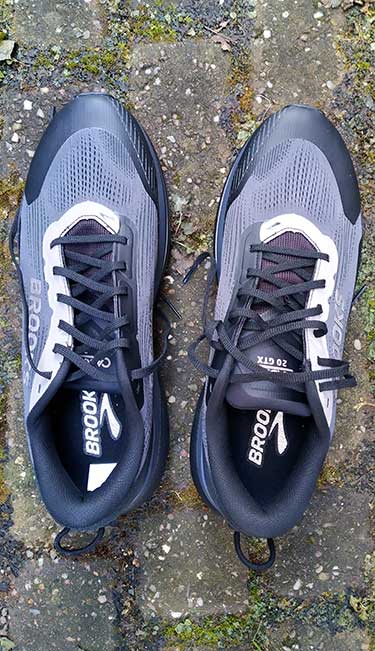 The Brooks Cascadia 20 GTX is a waterproof trail running shoe designed to be versatile enough to be used to run to your trail or for running routes that have a mix of road and trail. The cushioning level and length of the lugs make it more suited to hard-packed trails. It does offer some traction on softer ground, but the Brooks Cascadia 20 GTX wouldn’t be considered a good choice for cross-country running or routes with very soft, deep mud.
Brooks makes their most popular trail running shoe in two versions. One with a mesh upper and one with a Gore-Tex upper. Which version is the right choice depends on the time of year and where you do your trail running.
The plus points of a Gore-Tex upper are that it is fully waterproof and does breathe up to a point. At temperatures below 10 degrees C, unless you have particularly hot feet, the upper will breathe adequately for your feet to feel comfortable in the shoes. As the upper is also windproof, it makes the Cascadia 20 GTX a great choice on cold days, as the cold air doesn’t pass through the upper as it would in a running shoe with a mesh upper. This keeps your feet warm and comfortable. Grass covered in morning dew no longer freezes your feet.
You can still get wet feet in waterproof trail running shoes. This can happen when water goes over the top of the shoes if you have stepped in a deep puddle, or if water has run off your legs or leggings into the shoes. The cuff of the Brooks Cascadia 20 GTX is well padded and will absorb any water that runs onto it, pulling it into the shoe. If these two scenarios are a problem for you, then you can use a set of running gaiters to bridge the gap between your running leggings and the shoes, preventing water from getting in over the top.
For me, the Brooks Cascadia 20 GTX is a luxury enjoyed on morning runs. I can run down to the river and across a few grass fields without getting cold, wet feet from the dew on the grass. The Gore-Tex upper also doesn’t pick up mud quite as easily as a mesh upper and is easy to rinse off. The outside of the upper dries quickly in a heated house, and the inside of the shoe needs no drying as it isn’t wet.
These attributes also make the Brooks Cascadia 20 GTX a good option for taking to cross-country races for before and after racing. You can warm up on mixed terrain without getting your feet cold and wet. They also look after your feet as you walk the course, and they are easily cleaned after the event.
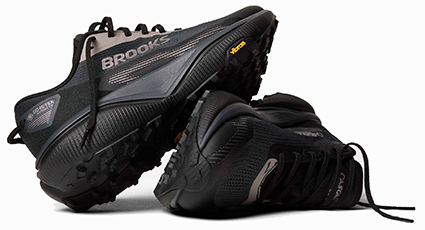 The Gore-Tex used for the Brooks Cascadia 20 GTX is Gore-Tex’s Invisible Fit Technology. This is where the Gore-Tex membrane is bonded directly to the running shoe’s upper. This makes the upper thinner, more breathable and more pliable than previous methods of adding Gore-Tex to a running shoe.
The result is an upper that fits the foot in a very similar way to the mesh version of the shoe. There are no extra seams, and you don’t feel like you have put on a waterproof shoe. The fit and feel are very similar to the same running shoe in the mesh version.
The heel cup is firm and holds the heel in the shoe well. The heel cup is well padded, as is the cuff, adding a high level of comfort. The tongue is also nicely padded and gusseted to help prevent dirt or grit from getting into the shoes. There is an elastic tab that sits partway down the tongue. This is there so you can tuck your laces under it once they are tied. This helps to stop the laces from getting untied by undergrowth while running. There is an extra lace hole at the top of the laces which can be used to make the heel fit snugger or to butterfly lace the shoes. The upper is nice and pliable and pulls in around the foot when the laces are pulled tight. The fit is narrow in the toe box. There is an overlay that runs around the base of the upper to give an extra layer of protection from abrasion. This overlay is widened at the toe to form a toe bumper.
 The midsole is made from Brooks DNA Flash v2, which gives a firmer, more responsive feel than the foam used for the Brooks Cascadia 19. The midsole is still nitrogen-infused, which seals the midsole, preventing water and grit from getting in. This makes the midsole last longer. Air also cannot escape, which gives the midsole an element of bounce or rebound. This can be overdone, making you feel like you are bouncing from one foot to the next, but in the case of the Brooks Cascadia 20, the bounce is very subtle. The ride also remains the same from the start to the finish of your run, which means that the cushioning, rebound and stability in the midsole continue to help you as your legs start to get tired towards the end of long runs.
The stack height is 38mm in the heel and 32mm in the forefoot, which is a 4mm increase compared to the Brooks Cascadia 19. The 6mm heel-to-forefoot drop has remained the same. This makes the Brooks Cascadia 20 GTX a suitable trail running shoe for heel or forefoot strikers. The 6mm drop also makes the shoes more stable than they would be with a higher drop, so there is less chance of a twisted ankle.
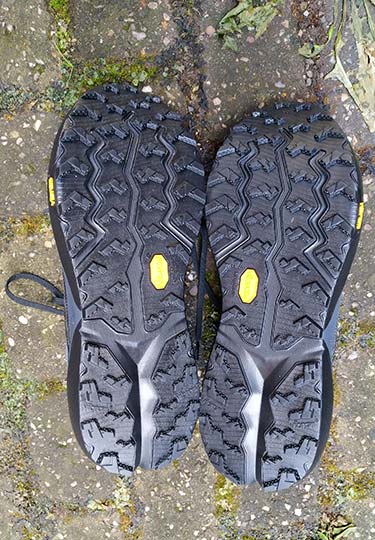
The Vibram Megagrip offers a good level of traction on wet surfaces. The 4mm lugs offer a good level of surface area, but at the same time they do bite into softer ground, providing a versatile level of traction.
The cushioning level feels high, but the midsole isn’t overly soft. The firm forefoot provides a nice, positive feel to push off. It’s easy to change direction or pick up the pace.
Brooks running shoes are similar in length to Saucony, Altra, Topo and 361. If you use New Balance, Hoka, Inov-8, Karhu or La Sportiva, then we would suggest trying half a UK size less to get a similar length. For example, a Brooks UK 11 is a similar length to a New Balance UK 11.5.
In summary, the Brooks Cascadia 20 GTX is a versatile waterproof trail running shoe. If you like to mix up your runs during the wet, cold winter months, then these would be a good option to keep your feet dry and warm.
Alternatives to Brooks Cascadia 20 GTX
Altra Lone Peak 9+ GTX : Like the Cascadia 20 there is a mesh and Gore-Tex version of the Lone Peak 9+. The Lone Peak has a broad rounded toe box and is zero drop promoting a more midfoot loading and allowing more foot function than the Cascadia 20. The traction is versatile enough for some softer ground but not deep mud. The rife is firm and might be too hard for some on tarmac. https://www.northernrunner.com/blog/altra-lone-peak-9-review/
Saucony Peregrine 16 GTX: A lighter nimbler trail running shoe than the Brooks Cascadia. There is more feel for the ground making it more suitable for more broken trail although still cushioned enough for mixed runs or road to trail. https://www.northernrunner.com/blog/saucony-peregrine-16-review/
Topo Terraventure 4 WP: A broad rounded toe box gives the feet more room to spread and function in the shoes. A firmer feel to the ride but, still cushioned enough for road to trail use. https://www.northernrunner.com/blog/topo-athletic-terraventure-4-wp-review/
VJ Xter : These are a warmer shoe best kept for winter use. The toe box is rounded to give the feet space to spread and function. The midsole is curved to give a rocker profile. This helps to maintain cadence and keep the foot moving when it touches the floor. Traction is good but not in deep mud. https://www.northernrunner.com/blog/vj-xter-review/
Inov-8 Trailtalon GTX: A rounded toe box gives the feet the room to spread and function in the shoes. A 6mm long lug gives good traction even in deep mud. Not as smooth on hard packed terrain particularly tarmac but, still suitable for mixed runs. A firmer ride than the Cascadia 20. https://www.northernrunner.com/blog/inov-8-trailtalon-review/
NNormal Cadi GTX: A roomy toe box and straight big toe line gives the Cadi a comfortable feel. Like the Cascadia 20 there is a Mesh and Gore Tex upper version of the Nnormal Cadi. The ride isn’t as smooth on the road but offers a good level of cushioning. Traction isn’t quite as good on soft ground. https://www.northernrunner.com/blog/nnormal-cadi-review/
Comments are closed here.