
Scott Supertrac RC 3 Review
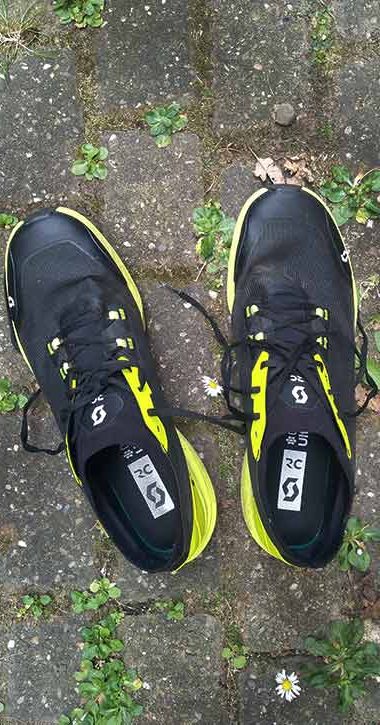 The Scott Supertrac RC 3 is a lightweight trail running shoe built to be nimble and responsive on technical terrain. Like previous versions, it’s cushioned enough for tarmac sections or hard-packed trails, yet flexible and agile for use on technical trail and fell.
The original Supertrac RC landed back in 2016. At the time, fell shoes had little cushioning, making them harsh on hard-packed ground, while trail shoes were often too stiff and over-cushioned, lacking ground feel—good only for smooth, hard trails. The Supertrac RC hit the sweet spot between the two—offering traction and nimbleness with just enough cushioning for comfort on hard ground. Thanks to Scott’s eRide midsole shape, it also delivered a smooth, fast feel underfoot without losing ground connection. The Supertrac RC 2 arrived in 2020 with a few small tweaks, and remained the race shoe of choice for Scott’s elite trail team.
In 2025, Scott launched the latest version—the Supertrac RC 3. It’s been used by their elite athletes throughout the past season and continues to be their go-to race day option. Given how much shoe tech has progressed over the lifespan of the Supertrac RC, it’s no surprise the RC 3 features some big updates.
First up, the upper is now made from Matryx—a lightweight, supple material also used by many premium trail brands. It’s made by weaving polyamide and Kevlar fibres, giving the upper high abrasion resistance while remaining breathable and water-resistant. Scott has used this material to construct a sock-like bootie upper, with a fully integrated tongue made from a soft, elastic weave. It features zonal padding to protect your feet from lace pressure. You pull the RC 3 on like a pair of socks, and it delivers a secure, race-day fit while helping to keep grit and debris out. The same soft weave is used to form a cuff that wraps around the ankle opening, sealing the gap between the shoe and your sock.
The fit feels snug and secure, but because the material is so thin, it doesn’t feel restrictive. It actually feels quite roomy. The shape is similar to the RC 2—a precision fit in line with most brands’ racing shoes. The foot doesn’t sit deep in the midsole, and there are no overlays across the top of the foot, which means the upper can accommodate a range of foot shapes despite the pointed silhouette. The big toe line is nice and straight, giving a really positive toe-off.
There’s a thin, flexible plastic heel cup that conforms to your heel, with just enough padding for comfort. Laces help secure the fit, and there’s an extra lace hole for a snugger heel lockdown or a butterfly lacing option.
A protective overlay wraps around the base of the upper and opens into a soft, pliable toe bumper that offers adequate protection without adding bulk.
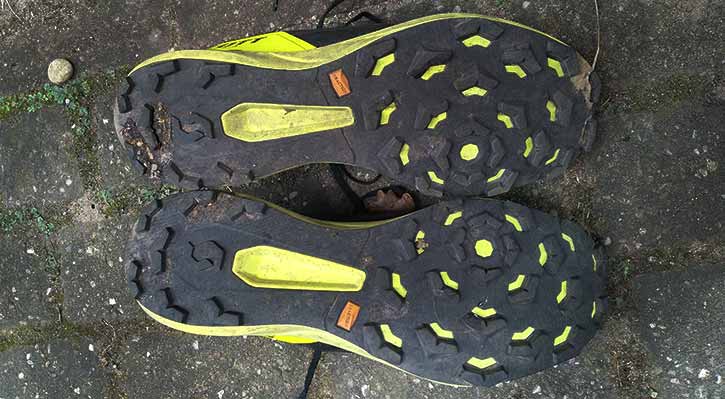
The RC 3 continues to use Scott’s eRide (now referred to as ER2) rocker geometry, which encourages quick cadence and upright posture, keeping you light on your feet. The outsole lugs have always been designed to strike a balance—grippy enough for mud and soft terrain, but shaped to ride smoothly on firmer ground. Unlike aggressive pointed studs (which can feel unstable on hardpack), the RC 3’s rounded 5mm lugs let you move fluidly, even on dry trails or forest roads. While they won’t match 7–8mm mud lugs for a proper XC race, they’re grippy enough for most muddy UK trails and fell terrain.
 The midsole has been updated to Scott’s Kinetic Light Foam—a responsive compound that gives you ground feel without sacrificing underfoot protection. On top of this is a glued-in Ortholite Ultra insole, which adds soft cushioning on impact and stays put even on long, steep descents. It doesn’t dull responsiveness or remove trail feedback, which is a tricky balance to strike.
The ER2 rocker has been made more pronounced in this version, delivering a stronger toe-off. The midsole is also more flexible, which improves the shoe’s handling on rough, uneven terrain. Previous versions were stiff through the midfoot, limiting agility on rutted ground or during heather-hopping across moorland. This version closes the gap—almost matching a fell shoe in flexibility—allowing it to perform far better on broken ground.
The stack height is 20mm in the heel and 15.5mm in the forefoot, giving a 4.5mm drop. That’s what I want from a shoe in this category: a thin, flexible midsole with good ground feel. A UK men’s 8 weighs 255g, which is light—and thanks to the sock-like fit, flexibility, and rocker, it feels even lighter when running.
The 5mm lugs are made from Scott’s own traction rubber, which has been consistently good in wet and dry. The outsole pattern now uses a more 360-degree lug layout to improve grip on uneven terrain and during changes of direction.
The RC 3 has become my go-to shoe for Friday morning sessions. These usually involve loops around a grassy field on a hill—about 3 minutes per loop, with a mix of ups and downs. When it’s wet, it gets muddy—like XC conditions. Recently, with the dry weather, it’s turned rough, the churned mud hardening into concrete-like ruts. It’s been a great test for the RC 3, which has handled it all—offering enough protection, reliable traction, and flexibility that helps the shoe mould to the ground rather than fight against it.
Fit guidance:
Scott running shoes are similar in length to Hoka, New Balance, Karhu, Inov-8, and La Sportiva. If you usually wear Brooks, Saucony, Topo, 361, or Altra, try half a size up to get a similar length. The fit is comparable to Inov-8’s precision fit or La Sportiva’s more technical models like the Mutant or Cyklon.
In Summary
The Scott Supertrac RC 3 is a lightweight, nimble trail racing shoe best suited for technical terrain, but it’s also comfortable on hard-packed trails and tarmac sections.
Other Considerations
Saucony Peregrine 15: A softer more cushioned ride that makes them feel less of a race day shoe and a bit less nimble. Versatile enough for some tarmac and hard packed ground like the Supertrac RC 3. https://www.northernrunner.com/blog/saucony-peregrine-15-review/
VJ iRock Plus: A bit more like the classic fell shoe offering a bit less cushioning and lacks the smooth ride on hard packed terrain although it still has some cushion that makes it comfortable on this terrain. https://www.northernrunner.com/blog/vj-irock-4-plus-review/
Inov-8 Trailtalon Speed: A broad rounded toe box allows the feet the room to spread and function in the shoes. Available in two widths. Comfortable on hard packed terrain and tarmac but, doesn’t have the propulsive race feel of the Supertrac RC 3. https://www.northernrunner.com/blog/inov-8-trailtalon-speed-review-2/
Scarpa Spin ST: Longer lugs give the Scarpa Spin ST a better level of traction in the mud. However, this takes away the smooth ride on harder packed terrain. Although there is enough cushioning for some tarmac and hard packed surfaces. https://www.northernrunner.com/blog/scarpa-spin-st-review/
La Sportiva Cyklon: The Cyklon has a much higher gaiter around the ankle and a BOA fastening to pull the upper in around the foot. This feels very secure but, not quite as light and free as the sock like upper of the Supertrac RC 3. It would be personal preference that would decide which is the better fit. The traction and cushioning is similar. However, the Cyklon lacks a propulsion system like the Scott ER2 which makes it run like a trail shoe on the road and hard packed surfaces. https://www.northernrunner.com/blog/la-sportiva-cyklon-review-boa-lacing-system/
Comments are closed here.